On-demand Webinar
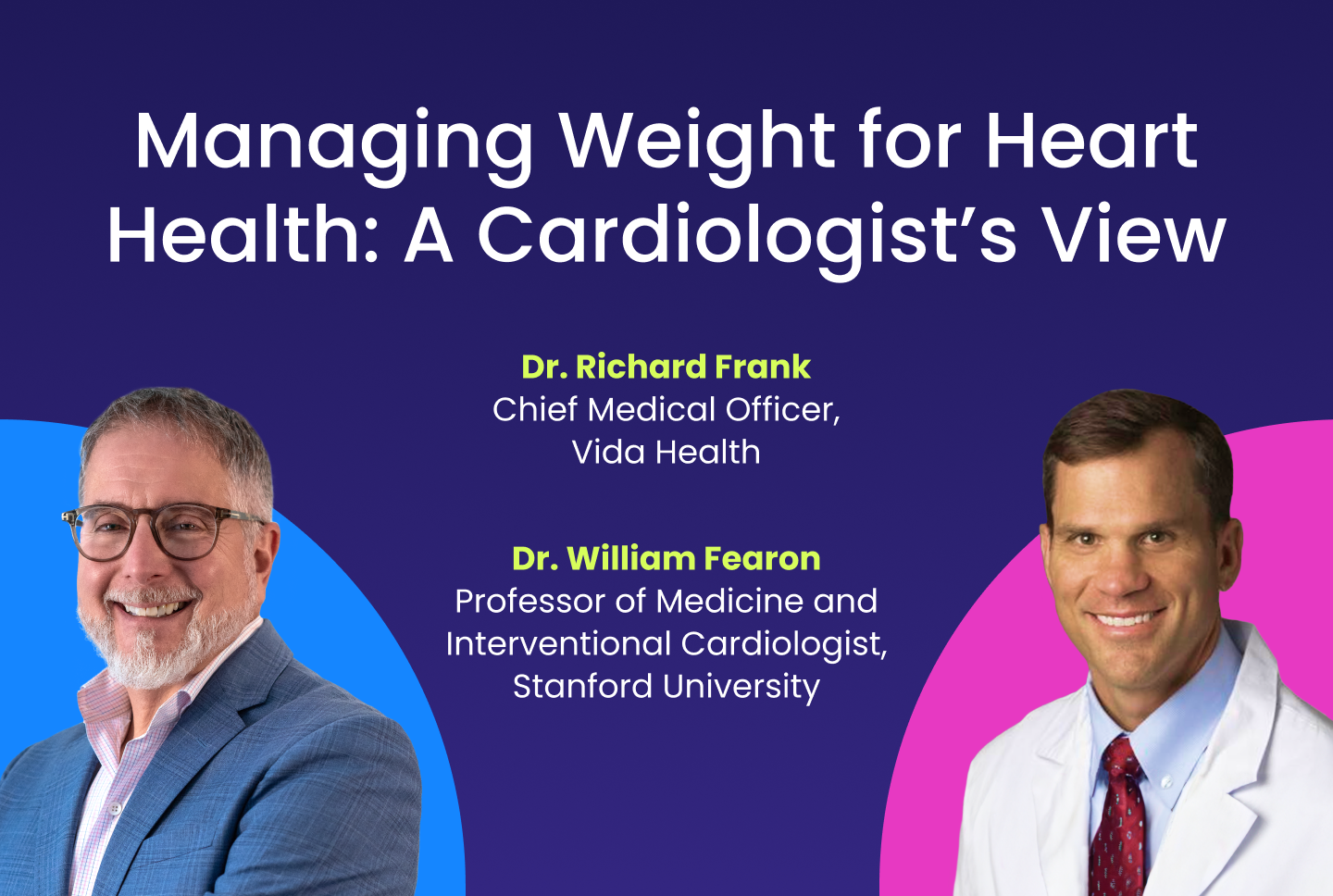
Managing Weight for Heart Health: A Cardiologist’s View
Webinar summary
Obesity and cardiovascular disease are closely linked, and new anti-obesity medications, including GLP-1s, are changing how clinicians and plan sponsors think about prevention, risk reduction, and long-term outcomes.
In this webinar, Vida COO Venita Lakhani hosts Stanford interventional cardiologist Dr. William Fearon and Vida Health CMO Dr. Richard Frank in a deep dive of what’s driving cardiometabolic risk, where GLP-1s fit in cardiac care, and the critical relationship between obesity and heart health.
Facing alarming statistics where nearly half of US adults have some form of cardiac disease and 42% live with obesity, the discussion centers on the transformative potential of GLP-1 medications. The experts explain that these drugs improve cardiac outcomes not just through weight loss and blood sugar control, but also through powerful ancillary benefits like reducing systemic inflammation (CRP) and stabilizing arterial plaque.
Crucially, the speakers emphasize that GLP-1s are not “magic pills.” The data shows they are most effective when combined with comprehensive lifestyle changes, such as diet, exercise, and behavioral therapy to manage “food noise.” The session concludes with practical strategies for health plans and employers, advocating for managed, stepped-care models that ensure these high-cost medications reach the high-risk patients who need them most, addressing real-world questions employers and health plans face.
Key takeaways
- More than just weight loss: GLP-1 medications offer significant cardiac benefits beyond simply reducing body mass. They can improve cardiometabolic risk through many avenues, and potentially lower systemic inflammation.
- Evidence beyond diabetes: GLP-1 intervention has expanding into other conditions for people with obesity and established cardiovascular disease, including reductions in major cardiac events like heart attack, stroke, and even cardiac death.
- This is not a magic pill: Lifestyle change remains foundational, but is difficult to sustain without coaching, nutrition, and behavioral support.
- A strategy is essential: A “one-size-fits-all” coverage approach can drive cost, making managed pathways increasingly important for employers and plans
- Obesity is a chronic disease: The medical community now recognizes obesity as a multifactorial, so effective treatment must address behavior, biology, and environment
How weight and heart health are connected
Heart disease remains one of the leading causes of death in the U.S., and obesity is now recognized as a major independent risk factor for cardiovascular disease. Excess weight contributes to insulin resistance, hypertension, dyslipidemia, sleep apnea, and chronic inflammation, all of which increase the likelihood of heart attacks, stroke, and heart failure. The panel emphasized that weight, diabetes, and cardiovascular disease should be viewed as interconnected conditions rather than isolated diagnoses.
The evolving role of GLP-1 medications in cardiac care
Originally developed to treat diabetes, GLP-1 medications are increasingly used to address obesity and cardiometabolic risk. Dr. Fearon explained that beyond weight loss and glucose control, these medications may improve blood pressure, lipid profiles, and systemic inflammation, which can directly influence cardiovascular outcomes. Emerging evidence also suggests benefits in certain heart failure populations, particularly heart failure with preserved ejection fraction.
What recent trials tell us about cardiovascular outcomes
The discussion highlighted the SELECT trial, which studied patients with obesity and established cardiovascular disease who did not have diabetes. Participants treated with semaglutide experienced reductions in major adverse cardiovascular events, including heart attack and stroke, compared to placebo. These findings reinforce the importance of addressing obesity itself as a way to improve heart outcomes, independent of diabetes status.
Why lifestyle change still matters and why it’s hard
Despite the promise of medication, the panel stressed that diet, physical activity, sleep, and medication adherence remain essential to heart health. However, sustained behavior change is difficult due to time constraints, access to healthy food, socioeconomic barriers, food-related cognitive patterns, stress, and genetic differences in metabolism. Structured support such as coaching, medical nutrition therapy, behavioral health interventions, and ongoing monitoring can help bridge the gap between clinical guidance and real-world behavior.
Implications for employers and health plans
Employers and health plans face growing pressure to address obesity-related costs while managing access to GLP-1s responsibly. The panel discussed why simple prior authorization may be insufficient and why many organizations are moving toward managed approaches that start with lifestyle intervention, escalate to lower-cost medications when appropriate, and reserve GLP-1s for higher-risk members or those who do not respond to conservative options. This strategy can improve outcomes while helping control population-level costs.
Veeneta L.
Good morning, everyone, or good afternoon for those of you on the East Coast. I am Veeneta Lakhani, and just excited to, bring you guys a great talk today, on the topic of the relationship between weight and heart health. And, we have the pleasure today of having a, kind of esteemed clinical, guests, doctor Bill Fearon and doc doctor Richard Frank. I’m gonna let them introduce themselves. I am the chief operating officer here at Vida Health. I’ve been here six and a half years and have a long history in health care, managed care, and health care consulting.
So just glad to be here today and honored to have this conversation with, with both of these doctors. So maybe we’ll start with doctor Fearon. You wanna introduce yourself?
Dr. Fearon
Sure. Thanks, Mita. I’m, Bill Fearon. I’m a professor of medicine at Stanford University.
I’m a cardiologist and focus on interventional cardiology. So I do, procedures like coronary stents and transcatheter aortic valve replacements. But I also have a, clinic where I see patients with, cardiac disorders and do some clinical research as well.
Veeneta L.
Wonderful. And doctor Frank?
Dr. Frank
Thanks, Veeneta. I’m Richard Frank. I’m the chief medical officer of Vida Health. I’ve been with the company for four years responsible for clinical strategy. I spent the bulk of my career in managed care, primarily the large national payer responsible for their Medicare Advantage and Medicaid products.
Veeneta L.
Excellent. So we’re gonna dive down, and I’ll set the stage here just with a few stats that I don’t think is gonna surprise anyone, but, but I think it’s it’s good to level set. Right?
Effectively, heart disease is kind of one of our biggest, problems in the US today. You know, some of these statistics are alarming. Right? Forty eight percent of US adults have some form of cardiac disease. Forty two percent live with obesity, and there is a ton of overlap as we’re gonna talk about, between the, people who have obesity and and what their risk looks like from a heart disease standpoint. Twenty percent of deaths, one in five, are due to heart disease, and we have a ton of cost associated with this, both in the health care system itself and kind of in society as a whole. So this is a really big problem, and, I think we’re gonna sort of dive into the relationship here between heart health and and obesity. This particular slide is just showing you how much cardiac disease is really costing us as a society.
You know, and and what I thought was interesting about this data is it’s a lot of it is in the healthcare costs itself, right? The kinds of costs that incur when you go to the hospital and have to take, medicines and and have expensive surgeries.
And all of that is sort of, you know, effectively tripling and quadrupling over the years. But then, you know, you gotta look at things like productivity losses overall just from being sicker or from, you know, kind of, your a lower lifespan and all of that together makes this a pretty stark picture, right? We’re headed down a place where, effectively we are gonna be, much more expensive as a result of cardiac disease in two thousand and fifty than we are today.
So the the the really, the area of this and the aspect of this problem we’re gonna dive into is how these things relate. Right? Weight, diabetes, heart disease, they’re all intertwined. We know that, you know, adults with obesity are two to three times more likely to develop heart disease and various fat, you know, kind of aspects of heart disease, heart failure, coronary heart disease. And so, heart disease, heart failure, coronary heart disease. And so we’re gonna dive in today into why that is the case and, what some of the new medications bring to us in terms of, new treatment pathways and hopefully new outcomes.
So, so just looking forward to kinda getting, your perspective, doctor Fearon, as a practicing physician who sees patients in this, kind of who sees cardiac patients every single day. Tell us what you think the role of the GLP-1s, that, you know, these new medications that are now out in front of us and, and help us to tackle obesity. What role did they play in cardiac care?
Dr. Fearon
Yeah. So, just as a reminder for people, these are new class of medicines, relatively new, I guess. They’ve been around for a little while that, originally were developed for diabetes. And so when we’re talking about their role in cardiac care, as you mentioned, diabetes and cardiovascular disease are clearly intertwined. And so many of the cases where I’ll see GLP-1s are in patients with diabetes who also have coronary disease or heart failure or some other cardiac condition. And they’re particularly effective at reducing, sugar, and, they have a low risk of lowering sugar too much, Something we call hypoglycemia, for example, insulin can do that. So they’re they’re safe drugs too. They only work when the sugar is high. And so that’s, clearly a main area where we see them being used, are are cardiac patients who have diabetes. But, what we’ve learned is that there really is a multifactorial effect of these medications.
You mentioned obesity. So the that’s another key indication for these drugs for people who are obese or overweight, lowering weight loss. And that has beneficial effects certainly on blood pressure, cholesterol, diabetes as we mentioned. So it it, improves, people’s cardiovascular risk factors and, cardiac condition in that respect. And just by, of addressing obesity, I mean, obesity is now considered, you know, a risk factor for cardiac disease. We used to talk about, you know, high blood pressure, diabetes, high cholesterol, tobacco use. Now obesity is clearly a role, has a role there too. And, by removing, obesity from that, you improve, people’s, inflammatory state, you get rid of sleep apnea, other issues that can affect the heart significantly too.
And also improve activity, which we’ll talk more about, but, increased activity clearly has a beneficial effect. And the I mean, it’s really impressive the number of sort of ancillary effects that these medications have that have an effect on heart health, you know, things like, reducing the desire to drink alcohol, you know, effect on joint and muscle endurance, which also helps, with the activity, even memory, cancer. You know, there’s really almost no end to the the beneficial effects. So that those are areas where we’re really, seeing these drugs play a key role.
I guess I I would just add one other, and that’s, patients with heart failure.
There are two types of heart failure that we talk about, the classic one where you have the, the the pump is weak. You have a low ejection fraction. It’s not pumping well. They haven’t really been shown to be that beneficial in that setting, but there’s another very important type of heart failure, called heart failure with preserved ejection fraction or people where the heart’s pumping well, but it’s not relaxing well. And that can lead it to build up of pressure in the lungs and make people feel short of breath. And these drugs, as well as some, other class called SGLT two inhibitors, which we may talk about too, have been shown to be beneficial in that, type of heart failure, which has been a real bugaboo for us as cardiologists. It’s a difficult type of heart failure to treat. So wide range of effects of these medicines that have really kind of transformed our approach to many of our cardiac patients.
Veeneta L.
So it it sounds like there’s a clear role for these medications if a person has diabetes and, and kind of at risk for heart disease or if they have obesity, or if they have heart failure. What if they have none of the above but still have, you know, car some cardiac risk? Right? If they’re not obese, would would you still look at these medications as playing a role?
Dr. Fearon
Well, I’m optimistic. We don’t have a lot of data in that. We, so I I can’t say that, you know, there’s a, indication yet, but I I think when we get more data, that will be a role. Certainly, in the patients with obesity and cardiac disease, we have a key indication, and I’m not sure if we wanna talk about that now or…
Veeneta L.
Yeah.
Yeah. Absolutely.
Dr. Fearon
Yeah. So there was a real, sort of landmark study. It was called the select trial. Yes. And this looked at patients who were obese but also had cardiac disease. Many of them had had a prior heart attack or had heart failure or other cardiac conditions, but they didn’t have diabetes.
And they were randomized to semaglutide, one of the GLP-1s or placebo.
And, you know, not surprisingly, the patients had significant weight loss, which is one of the effects, of course, of this class of medicines. But what was really impressive is that they had reduction in really hard cardiac endpoints, things like cardiac death, heart attack, stroke, compared to the placebo arm. And so I think in this, that was independent of, any diabetes because they didn’t have diabetes. So I think it really speaks to the importance of controlling weight, and the relationship between obesity and cardiac disease. Now there were a lot of ancillary benefits. These patients, fewer of them went on to develop diabetes during follow-up compared to the placebo group. They had lower blood pressure, so they required fewer medications for that, lower cholesterol.
And one thing that was really, I thought, exciting about this study is that they looked at this, this blood test, this biomarker called c reactive protein or CRP, and this is a marker of the, inflammation that sort of gives an indication of how much inflammation is going on in the body. And the patients who were randomized to the GLP-1 had, significantly lower CRP values during follow-up. And so I think that was, that’s really exciting and probably plays a role in the beneficial effects, regarding, reduction in cardiac events. Now there are, of course, some downsides.
You know? I think fifteen or twenty percent of patients had to stop the medicine because of different side effects, largely GI effects. So it it’s not all a perfect situation, but but, it was really impressive the results of these. And, you know, this, study reminded me of a patient that I saw, soon after the COVID nineteen pandemic.
And, as many of you probably experienced during the pandemic, there were a variety of responses that patients had. You know, some of my patients really took the opportunity of, you know, less work, requirements and things to get into shape and to become more active. But then there are also some patients who went the other way and they became couch potatoes.
And, this particular patient, mister s, I’ll call him, a a sixty year old man that had coronary disease. I had, put a stent in his coronaries a few years back, and he, unfortunately, during the pandemic, you know, stopped exercising, gained about forty pounds, you know, really, was, I think, drinking more, just, you know, went the wrong direction. And so when I saw him, his blood pressure was, not well controlled. His cholesterol was out of whack, and he had developed diabetes, which he hadn’t had previously.
He had some insulin resistance, but no diabetes. He developed diabetes, and he was starting also to have some recurrence of his chest pain that was what originally led to the stent. And so, obviously, we were all very worried about him when we we, you know, started medications for his blood pressure and control and and cholesterol, but we also, added a GLP-1. And it was really remarkable over the next year how much he improved.
He lost, more than actually the forty pounds that he gained. Because of that, we were able to wean off some of the medicines that we had started for his chest pain, and we were you know, I had been worried that we were gonna have to bring him back to the cath lab and put in another stent or open up the stent that he had if that had re narrowed. His chest pain resolved. All of his blood test, cholesterol, and blood pressure had improved, and he really had a remarkable, turn of events.
And, I mean, granted, some of this was also he he sort of, had a, you know, a change in his lifestyle. He started exercising more, but I think the weight loss helped him with that. His, you know, he had more endurance and and his joints and, for feeling better. So, anyway, I thought that was a a really nice, example of how this class of medicines can, you know, reverse things when things go, you know, off the rails.
Veeneta L.
Yeah. It’s a such a great story, just given that, you know, you not only helped him in his kinda overall lifespan and well-being, but we avoided another procedure. Right? It sounds like, it because you thought that might have been likely if he hadn’t hadn’t lost the weight.
Dr. Fearon
that’s great.
Veeneta L.
Right. And so that’s exciting. What what would you say doctor Fearon gets you most excited about, the, ability of these new medications to have an impact on heart health?
Dr. Fearon
Yeah. So, I think these, ancillary benefits, that we talked about, I think the, effects on, inflammation, the effects on plaque development, both of which, are key factors to developing coronary disease that ultimately can lead to heart attacks.
You know, certainly, having a medication that can help us control obesity and being overweight is critical as well as diabetes, but it’s some of these other effects that go along with that that I think are really exciting.
Veeneta L.
Yeah. Absolutely. Doctor Frank, maybe you can comment a little bit. What gets you excited as you’re starting to, you know, see more and more patients maybe with overlapping obesity and heart health? What gets you excited?
Dr. Frank
So when I think about these drugs, I really think it’s an opportunity to not only treat, the underlying cardiac disease that, doctor Fearon has been talking about, but there’s really an opportunity to impact a variety of disease states outside of the treatment of obesity and outside the treatment of overweight. So these drugs have been already approved for the treatment of diabetes. Clearly, they are now second line therapy after metformin according to the American Diabetes Association.
They’ve been approved to treat or improve, obstructive sleep apnea.
Patients who have moderate to severe OSA.
Most recently, they’ve been approved to treat patients with what used to be called nonalcoholic fatty liver disease, but now is, called MASH or metabolic dysfunction associated steatohepatitis, quite a mouthful. And then coming in the future, we expect to see indications around patients who may have Alzheimer’s, opiate use disorder, polycystic ovarian syndrome, renal failure, knee, osteoarthritis of the knee. So there’s really quite a number of opportunities to deploy these drugs to improve the health of individuals who struggle with obesity and struggle with overweight.
Having said that, there really are probably two mechanisms by which these drugs work. I think both were referred to by doctor Fira. And the first is simply the reduction of of body weight or BMI and as well waist circumference.
Then there’s this other aspect of c reactive protein reduction, a reduction in inflammation.
And there may be circumstances where more conservative interventions, less costly interventions can deliver the mass effect, deliver the reduction in body mass index, and then potentially reserve these agents for when patients either fail those more conservative interventions or potentially, really need the reduction in inflammation to deliver the clinical benefit. So I think on the one hand, it’s really exciting all the opportunities we’ll have to deploy these drugs to improve the health of individuals.
But at the same time, I think they need to be deployed in an evidence based fashion and take into account which patients can most benefit by them.
Veeneta L.
Excellent.
Excellent. And I know, doctor Fearon, you referenced this, a little bit in terms of, how GLP -1s may reduce inflammation. Maybe, talking a little bit more about this might help the audience understand, some of the mechanisms behind it. So we’d love to see if you have to comment a little bit more about, about this relationship.
Dr. Fearon
Sure. Yeah. So I think the, the GLP-1s have a lot of effects that we’re still trying to understand better. But, by reducing, inflammation, that has a direct impact on, development of atherosclerosis or buildup of plaque in the coronary arteries.
The drugs also, increase or improve endothelial function. So the vessels or the lining of the blood vessels, the cells that line the blood vessels become more healthy and are able to release, agents like nitric oxide, which is a vasodilator.
And all of this improves blood flow to the heart muscle and preserves, you know, function of the heart muscle and prevents heart attacks. So, it really does go beyond, I think, just, you know, lowering or controlling sugar and and losing weight, it it has these, other effects that, you know, really decrease progression of coronary disease and heart and improve heart function.
Veeneta L.
Excellent. It it’s exciting to see, to see all of the different impacts. But I know in our audience and, kind of across the industry, there is a belief that, you know, we look at look at these pills as magic pills. And I think we, very much want to acknowledge that lifestyle plays an important role, in overall health, you know, in obesity and in kind of heart disease risk. Maybe you can comment a little bit, doctor Fearon, on how you see, the lifestyle playing a role with or without the medications, right, for, patients that that you’re treating today.
Dr. Fearon
Yeah. So this is really an important point and a great, question. You know, in all of our patients, we stress the importance of, you know, a lifestyle modification.
So it it goes from things like just compliance with medications that we prescribe because we appreciate that although we may write the prescription and even patients may tell us they’re taking them, that that’s not always happening. And so really, you know, encouraging and emphasizing the importance of being compliant with the medications is one key role.
Diet is certainly, critical. You know, you can take these medications that will help things, but without, also modifying your diet, you won’t have as much a benefit. And so low fat, low cholesterol, we talk about, like, a Mediterranean type diet where, you know, fish and chicken, avoiding red meat, you know, grains, nuts, olive oil, things like that, low carbs, really, is very important for the, cardiovascular health. And I guess the last key component of lifestyle that I’d say is is exercise.
And we’ve really learned how, even modest exercise can have a beneficial effect. So people talk about ten thousand steps, probably even seven thousand steps is, beneficial. Anything that you can do, has a beneficial effect on cardiovascular health. And what you know, not to get too into the weeds, but what we think is happening is that, you know, in all of us, well, hopefully, not all of us, but anyone with, coronary disease, plaque can develop, due to, cholesterol and and diabetes and high blood pressure and certainly smoking.
And this plaque, slowly builds up, and, at times, it can rupture.
And, fortunately, most of the times when the plaque ruptures, the debris inside, which can cause a blood clot to form, doesn’t lead to a heart attack or a cardiac event, but it just leads to the plaque getting a little bit bigger. And exercise and diet, and being compliant with your medications all helps to stabilize the plaque, and it prevents it from rupturing and and makes it less vulnerable. We talk about vulnerable plaques.
These, lifestyle changes can really stabilize the plaque and sometimes even lead to plaque regression so that if the arteries become narrowed, it becomes less narrowed. And so, certainly, GLP ones and other medications are critical, but lifestyle, is also just as important.
Veeneta L.
Great. What makes this hard? What makes lifestyle change hard? Just before you answer that, doctor Frank, one quick note for the audience. If there are questions, feel free to put them in the chat. We’re gonna, kind of take them at the end. So just wanted to to give that quick note.
So, doctor Frank, what makes lifestyle change hard? What, you know, we’ve known this for a long time. I think, you know, the guidelines suggest that even if you are on medications like GLP-1s, you should be, engaged in a comprehensive lifestyle program, that is, you know, working in tandem with any medications that you might be on? What makes that hard?
Dr. Frank
I think we all have busy lives. I think it’s difficult to change behavioral patterns.
I think in the absence of a supporting social network and an environment that makes the adoption of healthy patterns, it it can be extremely challenging to modify your behavior.
And so that what we do know that helps individuals truly change, their lifestyle to support their cardiac outcomes as doctor Fearon just mentioned, it really requires elements, of a a safe environment, a commitment by the individual, support externally through social networks, and this can be achieved either through commitments with friends and families and coworkers.
Or in the absence of that, it can be done through an organization like Vida where we can provide individual and group coaching.
It’s also oftentimes difficult because of socioeconomic barriers to care. Finding safe and accessible healthy food may be difficult in some environments.
Oftentimes, safe and healthy diets are more expensive than ultra processed diets. So you really want the opportunity to help individuals craft a practical solution, not just an ideal solution. So it may be easy for us as a doctor to say more fruits and vegetables and fish and healthy grains. But for an individual who might be struggling with access to those foods or the cost of those foods, it may be less than possible to implement that.
So that’s where potentially nutritional support and education so that an individual can gain access to a healthy diet even at a low cost store such as a dollar store. Sometimes there are cognitive barriers or barriers along with the way that we think about food. So many of us who are trying to diet or improve our nutrition are bothered by what’s called food noise, the constant thinking about food. Who doesn’t enjoy a Cheez It or potato chip now and then?
And that can become very distracting.
So adopting patterns of thought that help us reinforce those healthy lifestyles, that can, assist in improving one’s risk factors. And we know from evidence that cognitive behavioral therapy is a particular behavioral health strategy that has been shown to help individuals deal with food noise, disordered thinking around food, and emotional eating. And then lastly, there’s genetics.
Some some of us just handle calories different than others. Maybe our basal metabolic rate or our basal activity rate is different than other individuals who may have a slower BMI or are less active for genetic reasons. And that can be really where drugs enter the picture. So for individuals who fail, and we know most individuals will fail, present company included, will fail a lifestyle intervention to lose weight and improve themselves. Sometimes pharmacotherapy is really the only solution.
And there, we have access to both generics as well as the new branded GLP-1s.
Veeneta L.
Excellent.
Is there a because oftentimes in the industry, I think, we try to put folks into one bucket or the other. Right? This is a person who really should, just focus on lifestyle. This is a person who must have meds. Is it really that black and white, doctor Frank? Or, you know, how do you combine these things in a way to create effective regimens?
Dr. Frank
Yeah. I I don’t think it’s black and white at all. First off, I think many of us who trained in the early two thousands and earlier were trained to think of obesity as a personal failure, but it was in twenty thirteen that the AMA recognized obesity as a disease state. And as such, when you look at it as a disease state and all we have access to is the phenotype or essentially the presentation of the individual.
It’s nearly impossible to know who will respond to a, comprehensive lifestyle intervention. We’ve all met the unusual individual who made a commitment to exercise, nutrition, and healthy lifestyle and dropped ten percent of their body weight. Maybe even fifteen percent of their body weight through non pharmacologic interventions at all. And it was impossible to know at the outset whether or not they would be successful at that.
Similarly, some of the drugs that we have available to us, some of the generics, metformin, tuntipiramates, zenizamide, Kesimia, a combination of phentermine and topiramate, even the GLP-1s, all of these drugs have a known success rate and a known failure rate. And yet, until we engage in a treatment protocol, support the individual with these wrap around services I just alluded to, you can’t really tell who will have a significant weight reduction and improvement in health and who will fail to respond. So it’s very difficult at the outset to your question, Veeneta, to know at the beginning who will achieve goal.
Veeneta L.
That’s great. And it’s great to have all of the, you know, kind of the various different treatment protocols at your disposal.
Maybe you can talk a little bit more, doctor Frank, about, these results. Right? So we’re, you know, seeing weight loss here, regardless of whether you’re on meds or off meds, and there’s different cohorts. And so maybe you can help the audience understand, some of the, you know, kind of the outcomes that, we’ve observed so far.
Dr. Frank
Absolutely. So let me set some of the background and allude back to some of the earlier comments.
So first and foremost, we know that in order for individuals to be successful on any regimen, any pharmacotherapy regimen, they need to have a comprehensive lifestyle intervention.
And in fact, in both the Select and the Surmount trials, the two trials that gained approval of Wegovy and ZepBound respectively, they were, conducted in the presence of a lifestyle intervention. So patients didn’t simply come to, the clinical, researcher and receive a medication, they actually received a lifestyle intervention. So we know that in order to achieve the outcomes with GLP-1s, it’s necessary to provide these wrap around services. So and then secondly, as I shared with you, we know that some patients can achieve significant weight reduction and improvements in health with lifestyle alone.
A subset will need pharmacotherapy and even there, some patients can successfully have, significant weight reduction with first generation oral generic agents. And then lastly, we know some patients will fail both lifestyle and oral generics and need the GLP-1s.
But at the outset, we don’t know who will be successful on each each intervention.
And in a value based environment, I think it makes sense for patients without high risk conditions, like a history of myocardial infarction, a history of stroke, or peripheral arterial disease, or MASH, as I alluded to earlier. So for patients who don’t have those high risk, indications, I think it’s appropriate to try more conservative interventions to start and then escalate when patients don’t achieve goal with those lower cost alternatives.
So here we see the results of various cohorts in Vida. In this particular instance, we’re looking at close to four thousand patients. The x axis is time in the intervention protocol and the y axis is reduction in body weight off of baseline. So you see everybody starts at their baseline weight, and then we have three different cohorts. The blue is behavior change alone, The purple is low cost oral generics, and the green is GLP-1s. And what you see is that on average, each cohort delivers clinically significant weight reduction. And I should say parenthetically that the Centers for Disease Control and the American Diabetes Association have both defined that clinically significant weight reduction is anything greater than five percent.
So all three cohorts have delivered clinically significant weight reduction, albeit the green GLP-1 is the most potent to be sure. And certainly what we see at Vida is some patients will fail, the blue behavior change. They get escalated to the purple low cost generics. And even there, some will fail. And they too will escalate to a green most potent drug, the GLP-1.
But all three interventions in the right patient can deliver a meaningful clinical outcome.
Veeneta L.
And and just to confirm, doctor Frank, all three pathways, include whether you’re on, you know, medications or not. You know, obviously, behavior change is really just that. But, the low cost AOMs and those on GLPs, they also include behavior change regimen. Correct?
Dr. Frank
Absolutely. Because as I mentioned, it is evidence based to deploy these agents with a comprehensive lifestyle intervention.
So in Vida, that includes individual and group coaching, a minimum number of medical nutrition therapy episodes delivered by a licensed registered dietitian just as you would find in a bricks and mortar nutritional clinic, a course of cognitive behavioral therapy to help with the food noise, a tremendous amount of content, for individuals who are interested in simply learning about their, disease of obesity and overweight and understanding how nutrition activity diet. And then lastly and very importantly, monitoring.
So Bluetooth enabled scales because we know an evidence based intervention is simply weighing yourself on a daily basis to understand how your weight is
Veeneta L.
That’s excellent.
It’s great to great to see, sustainable results across different pathways, which kind of just kind of proves the point that it’s not one size fits all and we can achieve these outcomes, in in different ways for different people. So if we switch gears a little bit and think about employers and health plans who I think have a myriad of decisions to make, as they kind of move into the next plan year and how they offer these benefits.
Many of them are considering, whether to cover the drugs or not cover the drugs. And if they do cover them in what way, right, in what parameters.
And and they have to think about the expanded indications like cardiac disease and some of the other indications that have now come out for GLP-1. So if you’re sitting in the seat of, employers and health plans and thinking about this holistically, What what can you do or what advice would you give them, to to, you know, play a supportive role, in terms of addressing cardiac disease and the and the problem more broadly? So maybe doctor Fuhrman, we start with you, and then we’ll go to doctor Frank on this too.
Dr. Fearon
Yeah. So I I’d like to highlight a point that, doctor Frank made about, you know, when trying to achieve these lifestyle changes, which are so critical, you know, as a physician, cardiologist, you know, we have, like, ten minutes with the patient every, you know, three to six months, maybe annually even. And to really, be able to, emphasize the importance of of these sorts of changes or compliance with medications. It’s impossible.
And so sometimes we turn to having nurse practitioners or nurse coordinators call the patients, but that’s expensive and hard to do. And, you know, there’s apps and things that some people try to use on their phones. But, really, I think, what doctor Frank was mentioning about having a life coach, you know, something like Vida where, they’re getting, you know, reinforced repeatedly the importance of these things, can’t be undersold that the importance of that in order to really effectively achieve these changes. And then I think getting to your question, you know, we’ve heard these these drugs are expensive, and we really wanna target them to the patients who are gonna get the most benefit.
And, again, I think that’s where someone who can put the whole picture together, who has experience, and can individualize treatment can really help, identify those patients who who might benefit the most. Whereas, you know, as a busy interventional cardiologist, I might be like, just, you know, let’s just prescribe the GLP-1, you know, and that might not always be the right answer. And so, I think, you know, although, of course, we try as physicians, you know, to do the right thing and to spend time with our patients, it’s not always as possible as we’d like. And so, I think that’s one of the key messages that, is important for, employers and health plans to realize.
Veeneta L.
Yeah. I think that’s, that’s kind of really important and plays out in real life all the time across, not just cardiologists, but I think primary care and, any really doctor’s visit that you do. There’s limited time, and, you know, technology plays a role. Right?
The ability to chat with the care team and, you know, kinda do things in real time that’s different from showing up in an office and kinda needing time to address all these issues. So, doctor Frank, maybe you can comment a little bit about, your perspective. I know you live this every day with employers and health plans, kinda trying to figure things out. What what advice would you give them?
Dr. Frank
Certainly. And I think employers and health plans have a real challenge. We know that obesity and overweight are significant causes of, medical expense, medical expense trend for employers and payers. And yet, we also know that forty two percent of adult Americans struggle with obesity and seventy percent carry a diagnosis of overweight, which would be a BMI of seventy and above.
So for an employer or a health plan who is looking to improve their productivity and reduce the presenteeism and absenteeism in their workforce to cover, the entire workforce with these drugs without any type of management scheme in place is probably prohibitive.
And in fact, we’re already seeing, double digit increases in premiums across the country, probably in partly in as a result of GLP-1 expenditures. The estimate is that if every patient, who qualified for A GLP-1 received A GLP-1, we would be looking at something north of half a trillion dollars in medical expense for the US. So it’s it’s simply we we we can’t even contemplate that. So an employer or health plan looking to improve the health of their workforce really needs to deploy some type of management scheme around these drugs.
We estimate that for any patient who meets the FDA label and presents to their primary care physician or family physician seeking these agents, they’re likely to obtain them at least two thirds of the time.
So the management scheme, I think, has to go above and beyond what many, managed care entities put in place, which would be a prior authorization.
Does the patient simply meet the FDA label? And if they do, they gain access to the drug. Because I think you really need a management scheme, and that management scheme should achieve several things. First and foremost, it should identify the patients who really need these drugs to improve their health versus drugs who can be successful with lower cost, more conservative interventions. And we talked about that a few moments ago. Some patients can be successful with a lifestyle intervention alone. Let’s find them, provide that support, and deliver that outcome.
Some patients can be successful with low cost oral generics. Let’s find them, treat them, and create a sustained outcome. And then we limit the access to the GLP-1s either for patients who fail lifestyle and oral generics or patients who might have an underlying condition like, elevated cardiovascular risk or MASH, where the anti inflammatory properties of the GLP one really are necessary, and we would go straight to those agents. So it’s sort of a managed approach to the use of these agents and applying them to a patient, in a way that delivers the outcomes at the lowest cost.
But then lastly, and it goes back to doctor Fearon’s, comments around a lifestyle intervention, a sustained intervention. Obesity is a chronic disease. There isn’t treat for a year, cure obesity, and then you never have to treat again. It’s very much like hypertension and diabetes.
The best that one can hope for is remission, but a patient will always be at risk for overweight and obesity. And so you really need a wrap around solution that can help patients deploy a sustained clinical outcome, not just the medications alone, but also the lifestyle change that doctor Fearon referenced. And that’s where a sustained solution like Vida can offer a long term improvement in health and a long term reduction in medical expense and pharmacy expense trend.
Veeneta L.
That that’s great. Both of you kind of mentioned making sure that we, you know, kind of give the right patients the right care. So, you know, these medications are expensive. You wanna make sure you are deploying them for peep for those patients that actually really need them and are gonna do well on them.
How do you make that determination? And I think a lot of us wanna make sure that’s not just a costs decision. Right? How do you make that determination?
Maybe Doctor. Fearon, your thoughts on that, and then Doctor. Frank.
Dr. Fearon
Yeah. I mean, I I think, we need to turn to the the data that we have, you know, in the literature, and look carefully at, you know, the studies that have been done on particular subsets of patients.
And, also, in the big studies, look at subgroup analysis and which which subgroups of patients, benefited the most. And, I, you know, I think that is, the way to guide us. I think the good news is that there’s a lot of emerging data and and future studies being planned to look at even more indications, for these medications, like looking at patients who may not be, have a BMI of twenty seven or higher, which was what was used in the select trial, but have cardiac disease and seeing the benefits there. So needing or having the knowledge of all of these, results of these studies is really important because it helps us apply the drug in the right spot.
Veeneta L.
That’s great. Doctor Frank?
Dr. Frank
Yes. I think doctor Fearon’s exactly right. You start from the evidence, and from that, you derive your clinical protocols. But then when you have the individual patient in front of you, I think you have to do a comprehensive physical exam.
History and physical exam just as you would do in a bricks and mortar obesity treatment clinic. So what you’re really trying to elicit from both the patient’s history, but also their physical exam, their labs, and their past medical history, all of the clinical indicators so you can crosswalk them back to the evidence to determine the appropriate treatment. So if you look at the, for example, the the, select trial that, delivered the indication for treating patients with prior cardiovascular history, Patients who are indicated to receive Wegovy have a prior history of myocardial infarction, prior history of stroke, or advanced peripheral arterial disease.
So when an organization a clinical organization like Vida is assessing the patient, we simply wouldn’t ask, do you have a heart history? We would actually try to elicit the specific clinical indicators that would crosswalk to the need for a, GLP-1. Similarly, with obstructive sleep apnea, it wasn’t just that, excuse the euphemism, the patient snored. It was in fact that they had moderate to severe obstructive sleep apnea with what’s called an apnea hypopnea index greater than fifteen with less than a fifty percent, central component.
A very technical phrasing around who needs ZepBound for the treatment of obstructive sleep apnea. But when trying to avoid excessive use of these agents, it really becomes technical to take the literature that doctor Fearon described, but then cross walking it to the patient’s individual presentation.
Veeneta L.
Excellent.
So I have one more question when we turn to the audience questions, next. But if you kinda look at the next five to ten years and look at, you know, cardiac outcomes overall, you know, weight loss outcomes, maybe doctor Fearon, What do you think this will look like going forward?
Dr. Fearon
Yeah. So I think there’s a a number of, exciting future developments in this area.
You know, first of all, we’re gonna get more experience, you know, experience with dosing, how to, maximize the effect and minimize side effects and, you know, optimize compliance, you know, things like, you know, rolling out of oral forms of of GLP-1s, which is coming down the pipeline, I think, can also improve, compliance, in some cases.
And then further, refinement of combination medications, GLP-1 and other, medications are you know, I think we’ll get more experience using those. And the other good news, I think, for payers is that, as, more indications and, more options become available, cost should go down, and that should, make it easier, for us to get approval and also, for patients to get access to these medications.
When I look at, you know, what are the effects gonna be on cardiac outcomes, it’ll be really interesting to see over the next five to ten years. Because over the past number of decades, we’ve seen a pretty continuous decline in cardiac mortality and and atherosclerotic heart disease until about the last decade or so when the obesity crisis has really come to the fore, and those declines have sort of leveled out. And that’s been very concerning to us in cardiovascular medicine.
And I think or my hope is that that trend will reverse itself, and we’ll start to see again, the decline in, mortality and and cardiac events as we hopefully get better control of the obesity crisis with medications like, the GLP-1s. Now, of course, we’re not gonna eliminate, cardiovascular disease. At least, I don’t think we will in the near future, hopefully, eventually. But, at least we’ll be able to better, prevent it, I think, and and, you know, improve our patient outcomes who already have it.
Veeneta L.
That’s great. Doctor Frank?
Dr. Frank
I’m I’m excited because I think we’ll see, a couple of changes over the next, five to ten years. First off, to doctor Fierron’s point, I think it’ll become more accessible, because the price will go down. I think we’ll come to understand who really benefits from these drugs. But, also, there are more potent agents on the horizon. A yet to be approved ritatricide is a triple agonist, that could potentially be even a stronger agent than either Wegovy or ZepBound.
And so that could deliver incremental weight reduction in addition to incremental reductions in inflammation and improvement in cardiac outcome. But I think more important than that is just the societal change. I think many individuals struggled with obesity in the shadows because they perceived it to be, a failure of, personal will and commitment.
And even though the AMA designated it a disease ten years ago, it still doesn’t receive the kind of care and treatment that something like high blood pressure receives. So I think there’s the opportunity, just the cultural shift, that more individuals will have access to evidence based obesity treatment programs, and that in and of itself should improve cardiac outcomes over time.
Veeneta L.
Great. So I’m gonna stop share for a moment and see if we can turn to some of the audience questions that, have come up. I see a couple of them, so it might be worth just, talking through this. So I have a question that says, please address the cost effectiveness as studied by ICER.
And although clinically effective, taking into consideration the persistent issues, the adherence issues, and the PBIT of eight eighty million dollars Although it may be cost effective at the individual level, is it at the larger employer population level?
Specifically, is there a moderate to high so I think he’s really asking about, you know, kind of employee turnover, the cost over over a whole population, and is this really worth doing, as a society and, in in the population? So maybe doctor Frank, you can take this question.
Dr. Frank
Certainly. So the ICER is the Institute for Clinical and Economic Review. I do believe they did a review on these agents Yeah. And found them to be not, the they’re they’re priced excessively high for the clinical benefit they deliver.
So I certainly understand the, author’s question.
Additionally, we know that the in year return on investment for these agents is challenging, especially given the current price point. While these agents do improve cardiovascular outcomes, they do reduce, met cardiometabolic, risk factors. They can reduce the utilization of, joint replacement for knee osteoarthritis and a whole host of other conditions that I alluded to earlier.
Most of those clinical outcomes take years to materialize.
And so for a, employer or payer who’s seeking an in year return on investment or perhaps a two to three year return on investment. It is challenging given the current cost of these agents even net of rebates. And so I think to the author’s question, this is really where a management scheme comes into play, where, if you on a population level, patients who can be successful with conservative lifestyle interventions receive those. Those who need something escalated and really need pharmacotherapy move on to oral generics as appropriate. And then the select flu few who need access to a GLP-1 still receive those drugs in a timely fashion. That then doesn’t reduce the unit cost of the drugs, but it does reduce the population cost of those drugs. And then when we deliver meaningful clinical outcomes, they can be spread across a lower cost baseline because GLP-1s are only prescribed when absolutely necessary.
So here we can incorporate the ICER’s, economic outcomes with a management scheme, and then the employer can realize an in year return on investment, and deliver better health and outcomes for their employees and dependents while still having an affordable, benefit structure.
Veeneta L.
It’s great. So there’s a number of questions also in q and a, and I think we’ll maybe take a couple of these. We have a few more minutes left. What’s the issue with BMI?
So, this, you know, this question is about health plans that are requiring a forty BMI, for example, in order to get access to the medications. And, and rightfully there are people between thirty and forty who are indicated for the drugs. You know, what is the logic behind this and why why, create it create such a high threshold? So, again, doctor Frank, maybe we’ll start with you on this one.
Dr. Frank
Yes. So we know that class three obesity is forty and above, and so that would be considered morbid obesity to use dated language. And so I think what, employers or payers who are setting a higher cutoff than the FDA label are trying to achieve is really two things. One, they’re trying to, reduce the utilization of these agents because as I said, forty two percent of Americans have a BMI of thirty and above.
And I think it’s closer to fifteen percent when you’re talking forty and above. So now you limited the denominator. And then as well as BMI goes up, so too do the risk factors. So the return on investment, goes up as well.
But I think the harsh reality for payers and employers is that to your the way you phrase the question, Veeneta, is that you’re leaving some patients behind, patients who have BMIs of thirty to forty, who could benefit from an evidence, based obesity treatment program, even if it’s not a GLP-1. So I think while I understand the, the approach of employers and payers by limiting the cost and raising the return on investment. I think when you’re talking about population health, a better strategy would be to have a management scheme in place and offer these agents to whoever can benefit, from them knowing that they will only be utilized when absolutely necessary.
Veeneta L.
Yep. Absolutely. This is another, question we’ve gotten in. I think we we hear this all the time. Once the patient’s lost the weight and has better medical outcomes, do you keep them on the GLP-1 or take them off? I don’t know, doctor Fearon, if you have a perspective on this one.
Dr. Fearon
Yeah. Generally, we’ll keep them on. I mean, we might, try to, taper the dose a little bit. But I think, if you just completely stop it, they’re bound, to go back and regain the weight and regain the the risk factors. And so we encourage patients to continue.
Veeneta L.
That’s great. On in terms of alternative treatments, is anyone studying, collecting data on patients with the GLP-1 and behavior change together? I think, doctor Frank, you do have some data in this regard. Right? I think they’re asking about the outcomes within when you do behavior change with GLP ones together around adherence.
Dr. Frank
Yes. And in fact, that was the basis for the select trial and the surround trial. Both trials deployed a lifestyle intervention along with the GLP-1, so it was behavior change and the GLP-1s. And so the clinical outcomes that those two trials reported, are the basis for the question.
We’ll go be typically delures between thirteen and fifteen percent, and ZepBound’s somewhere around twenty to twenty one percent. The soon to becoming retatratide, the triple agonist, is probably closer to twenty five to twenty six percent. I think the corollary of the question might be a bit more interesting. Can these drugs deliver, weight reduction in the absence of a behavior change program?
I haven’t seen a true peer reviewed, study in this regard. I have seen some subset analysis that suggest that patients who receive these agents in the absence of a lifestyle intervention tend to lose closer to eight to ten percent.
So we do know that the lifestyle intervention combined with the drugs themselves delivers a synergistic response.
This goes back to doctor Fearon’s, statements earlier in the comment, in the discussion, but they do exceed the drug alone. So to the extent that either a clinician or a, sponsor is choosing to cover these drugs, there is demonstrable value in deploying the lifestyle intervention in conjunction with the drugs.
Veeneta L.
Great.
So we have three minutes left. I think I can maybe I’ll squeeze in one more question that I think, the audience is asking, and this one’s, you know, I I know, I’ve read a lot about this. What is the real cause of obesity? Is it just lack of exercise? Is it a lack of nutrition?
What should we really be focused on if we’re trying to get at the root cause of obesity overall? Maybe I’ll let both of you answer this and this will be the last question. So doctor Fearon, your your thoughts there?
Dr. Fearon
Well, I think we’ve learned that it’s clearly multifactorial.
There does appear to be in some people genetic factors that contribute to obesity, you know, leptin genes and others, which seem to regulate people’s appetite and and their energy, expenditure, can, lead to obesity. So there’s that component. And then, of course, we’re all aware of the environmental factors.
Our iPhones are probably a key a key factor there. But, you know, diet, just not not following a good diet, lack of exercise, even things like sleep. You know, if, you’re sleep deprived, that can affect, and regulate your appetite and your activity levels. Stress certainly plays a role. So I think there there are multiple issues, and that’s why it takes really a combined, effort at addressing each of these, in order to really have the the most, success.
Veeneta L.
It’s great. Doctor Frank?
Dr. Frank
Don’t think there’s much to add there. Behavior genetics environment leads to overweight, leads to obesity, and leads to cardiometabolic syndrome. So in order to treat the patient, you really have to deploy a multifactorial solution.
Veeneta L.
That’s great. Well, thank you both. This has, been a great discussion. I have learned a lot and always enjoy talking about this topic, with, kinda, strong, respected, and great clinicians like yourselves. Thank you to the audience for participating today and sending us, thoughtful questions. Thank you so much.
Featured Speakers
-
 Veeneta Lakhani Chief Operating Officer, Vida Health
 -
 Dr. William Fearon Professor of Medicine and Interventional Cardiologist, Stanford University
 -
 Dr. Richard Frank Chief Medical Officer at Vida