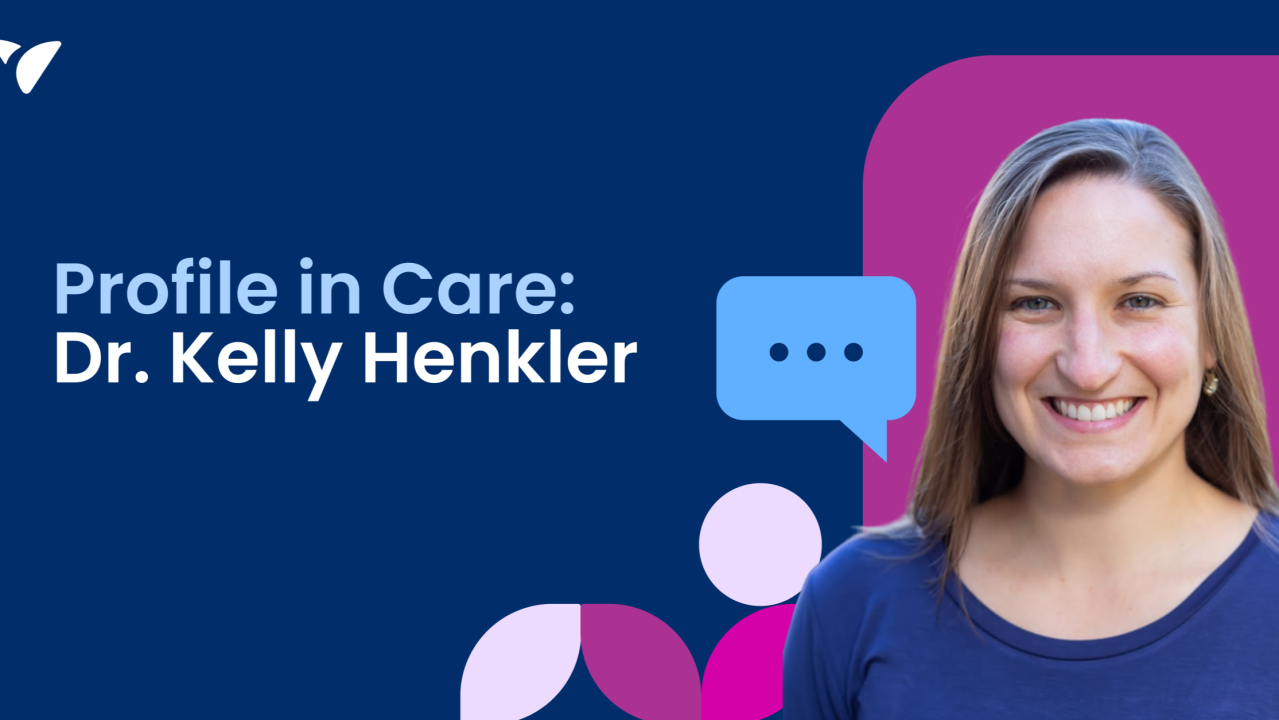
For Dr. Kelly Henkler, medicine has always been about more than diagnosing and treating disease.
From the beginning, she was drawn to a career that allowed her to pair scientific rigor with human connection, where data, empathy, and real relationships could coexist.
“I went into medicine because I enjoyed science but also wanted a chance to interact with people (like my patients!) regularly in my work.”
That balance continues to shape how she practices today. In a healthcare system that often prioritizes speed and volume, Dr. Henkler remains grounded in the belief that meaningful care requires time, listening, and trust, especially when working with patients navigating obesity and chronic conditions.
Why Vida’s Model Matters
Like many clinicians, Dr. Henkler spent years practicing within traditional healthcare environments where lifestyle change was acknowledged as important, but rarely supported in a meaningful or sustainable way.
“Though medical guidelines regularly recommend lifestyle support, as a clinician, there is never time to truly do that well.”
This disconnect between what guidelines recommend and what clinical workflows allow creates frustration for both patients and providers.
At Vida, Dr. Henkler found something different.
“This is the first place I have worked that allows me to offer my patients easily accessible, affordable lifestyle and nutrition coaching, and I think that is game changing.”
For her, Vida’s integrated model removes one of the biggest barriers in obesity care: access to consistent, multidisciplinary support. Instead of isolated visits or generic advice, patients receive coordinated care that aligns medical treatment with nutrition, behavior change, and real-world realities.
How Obesity Medicine Reshaped Her Perspective
Becoming board-certified in Obesity Medicine marked a profound shift in how Dr. Henkler understands weight, biology, and responsibility.
“The training involved in becoming board certified in Obesity Medicine fundamentally changed the way I think about weight and I think it will benefit my patients immensely.”
Through that training, she gained a deeper appreciation for the complex biological, environmental, and psychological factors that influence weight, factors often overlooked in public discourse.
“Our society puts so much blame on people when it comes to weight. What I have learned is that we have a lot less control over our body weight than society would like us to think.”
Rather than discouraging lifestyle change, this understanding reframes it. Dr. Henkler sees it as permission for patients to seek support without shame.
“I don’t view this as a reason to give up on lifestyle interventions, but more an acknowledgement that it is normal to need some help.”
That mindset, grounded in compassion instead of blame, helps shape every patient interaction.
Member Progress Made Possible Through Thoughtful Care
One member’s story stands out for Dr. Henkler because it highlights the power of thoughtful, individualized care and the ripple effects that extend beyond weight alone.
“I have a patient on generic contrave, this is a medication that is used for weight loss. It is made of 2 medications, one of them is also used to treat depression. Since starting she has lost 20% of her weight which is phenomenal, but in addition, she has noticed that her overall mood feels more balanced. It is really wonderful to see how much positive change this treatment has brought to her life.”
For Dr. Henkler, stories like this reinforce why obesity care must be holistic. Weight loss, improved mental health, and renewed stability are not separate outcomes. They’re interconnected. And while the clinical outcomes matter, Dr. Henkler finds the deepest fulfillment in hearing directly from members about how their lives are tangibly changing.
“Hearing members talk about how treatment has positively impacted their life. We get to hear these stories a lot here!”
They’re a reminder that effective care goes beyond lab values, it restores confidence, agency, and hope.
The Forces Shaping the Next Era of Care
Dr. Henkler believes the current moment represents a turning point in obesity and cardiometabolic care.
“I think this renewed focus on obesity care is primarily based on GLP-1s bringing obesity treatment front and center again. It is helping other treatments that have been in the shadows also be pulled into the spotlight.”
For providers, that means moving beyond oversimplified messaging and toward real solutions.
“I am excited that through Vida, healthcare providers can do more than just give their patients the one-liner: ‘You should lose weight.’”
A More Honest View of Progress
Dr. Passerman believes we’re entering a transformative moment in obesity and cardiometabolic medicine, driven by both rising If there’s one message Dr. Henkler wishes more people internalized, it’s that progress is rarely linear, and that’s normal.
“That weight is GOING to fluctuate. It WILL go up and down.”
Life happens. Priorities shift. Plateaus appear.
“There will be times when you reach plateaus and times when you have to focus on other things because that’s life.”
Recognizing this reality helps patients stay engaged rather than discouraged.
“Keeping that in mind can help people avoid feeling like they have failed when they reach a bump in the road.”
Looking Forward
Dr. Henkler is optimistic about where this renewed focus on obesity and cardiometabolic health will lead.
“I think this renewed focus on cardiometabolic health is going to result in an increase in the overall population’s healthspan.”
It’s a future she’s proud to help shape: One grounded in science, empathy, and care that meets people where they are.