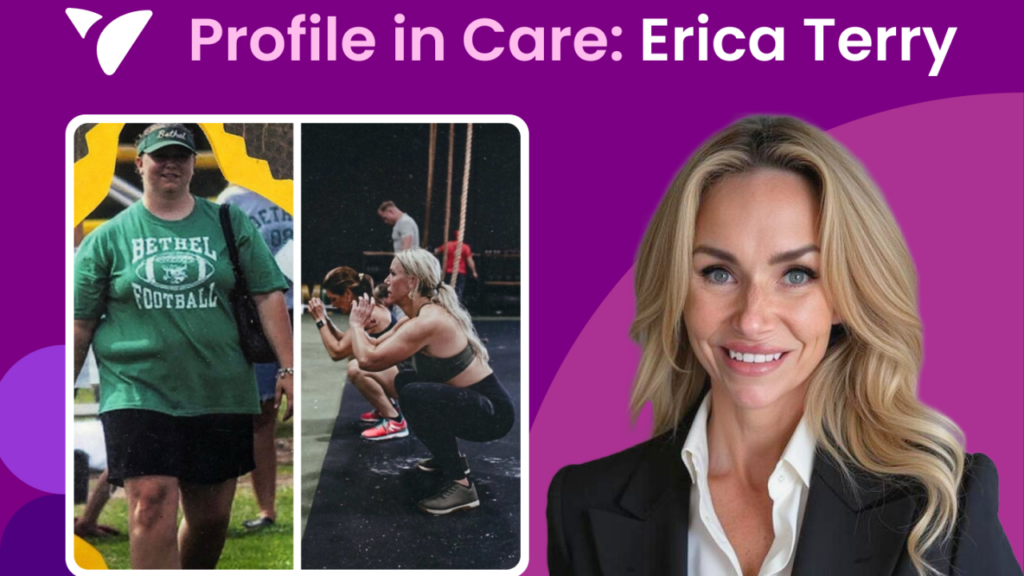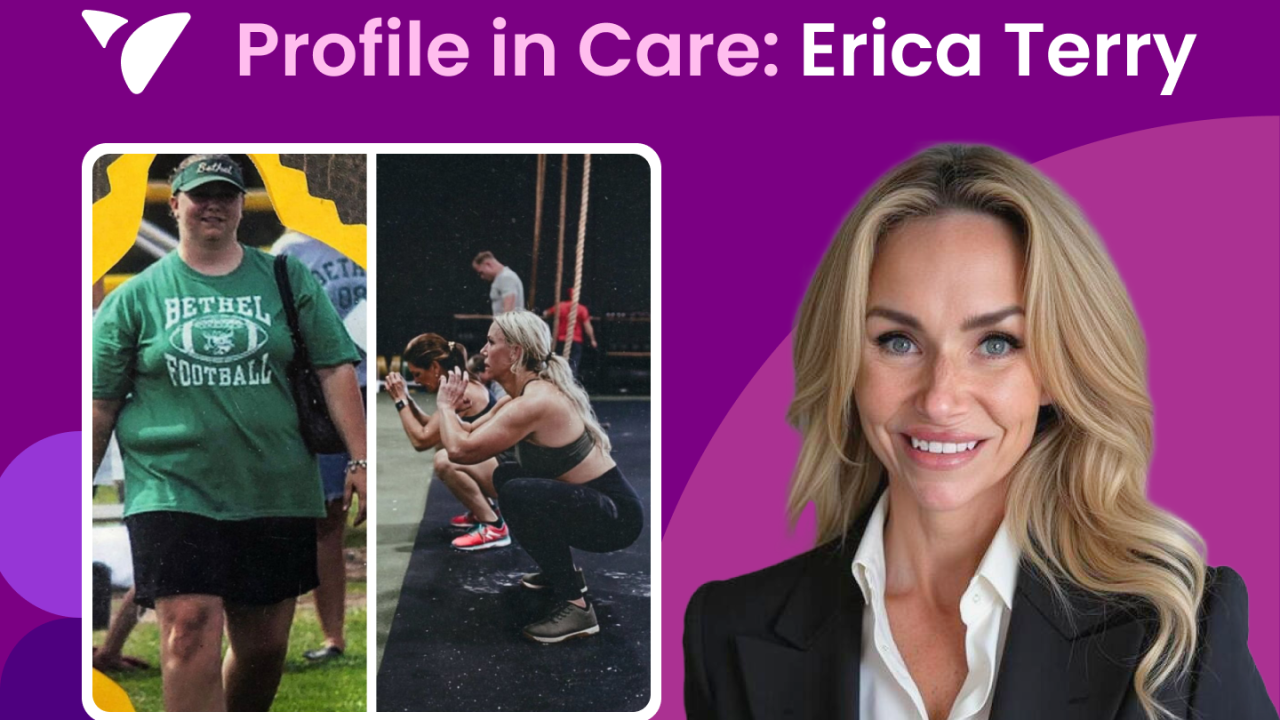
Lasting weight loss is not the result of a temporary plan. It is the product of sustained behavior change.
That understanding transformed Erica’s health and continues to shape the work she does every day at Vida, where she helps health plans and pharmacy benefit managers think differently about cardiometabolic care.
Her personal journey illustrates what research and clinical experience have shown for decades: meaningful, long-term weight loss happens when people are supported in changing the daily behaviors that influence health over time.
Rewriting the Story Around Weight Loss
Like many people, Erica spent years trapped in the cycle of trying to lose weight through restriction.
“I thought I had to be on a strict diet, specifically low-carb, cutting out everything I enjoyed, and relying on willpower alone,” Erica says.
This all-or-nothing mindset is common, but it rarely leads to sustainable outcomes. Restrictive approaches may create short-term results, but they often fail to address the underlying habits, emotional triggers, and environmental factors that shape eating and activity patterns.
For Erica, emotional eating was a major part of the puzzle.
“At the time, I didn’t fully understand how much stress, emotions, and mindset were tied to my relationship with food. Looking back, I was often turning to food for comfort or relief without really recognizing the patterns behind it.”
Without tools to manage those patterns, every setback felt like failure.
“I would make progress for a while, burn myself out, and then feel like I was starting over all over again.”
Her experience reflects a reality many people face: weight management is not simply about knowing what to eat. It requires building new behaviors, understanding personal triggers, and developing strategies that can be maintained during the ups and downs of real life.
Behavior Change Requires Support
The turning point in Erica’s journey came when she found accountability and community through CrossFit.
“Having accountability, encouragement, and people around me who pushed me to keep showing up changed everything.”
That sense of connection mattered as much as the workouts themselves. Research consistently shows that social support increases adherence to healthy behaviors, whether that means exercising regularly, improving nutrition, or staying engaged during difficult periods.
For Erica, the biggest shift was psychological. Instead of viewing health as a solitary struggle, she began to see it as a process that could be learned and supported.
“It was the first time I didn’t feel like I was trying to figure it all out alone.”
This is the essence of behavior change. Sustainable weight loss is not about perfection. It is about repeatedly practicing healthier choices, receiving feedback, and building the confidence to keep going even when progress is not linear.
Learning to Fuel Rather Than Restrict
Another critical milestone was working with a registered dietitian.
“Instead of focusing on restriction, I learned how to properly fuel my body and build habits that were actually sustainable long term.”
This shift from dieting to nourishment changed Erica’s relationship with food. Rather than labeling foods as “good” or “bad,” she learned how nutrition could support performance, energy, and overall health.
“It was the first time nutrition really made sense to me.”
For many people, this is where true transformation begins. Education helps turn abstract advice into practical daily decisions. Small habits, such as eating balanced meals, planning ahead, and understanding hunger cues, become the foundation for lasting results.
That combination of movement, accountability, education, and expert support fundamentally changed Erica’s perspective.
“It shifted my focus away from quick fixes and toward building a lifestyle that supported long-term well-being.”
The Wins That Matter Most
While Erica has experienced significant weight loss and improvements in her metabolic health, the most meaningful changes cannot be captured by a number.
Before changing her habits, she was constantly tired and often avoided social situations.
“I hated walking into a room and feeling like the biggest person there. I carried a lot of shame — And I wasn’t able to be as present with my kids as I wanted to be.”
Today, her life looks entirely different. She has more energy, greater endurance, and a stronger sense of confidence. More importantly, she can fully participate in the activities she loves with the people who matter most.
“I can help my daughter with soccer now. She works out with me sometimes. My son and I did CrossFit together through his high school and college years. Those moments mean everything to me.”
Her laboratory markers have improved dramatically as well. After once facing dangerously high cholesterol and the prospect of medication, Erica now reports that both her blood pressure and cholesterol are in an excellent range.
But perhaps her proudest achievement was crossing the finish line of her first five-mile Thanksgiving Turkey Trot.
“I was in tears from pure pride. I never thought I could do something like that.”
That event has since become an annual tradition with her daughter and best friend.
Progress Over Perfection
One of the most profound changes in Erica’s journey is how she responds to setbacks. Behavior change does not eliminate hard weeks, stress, or lapses. What it does provide is resilience.
“My body is capable of far more than I ever gave it credit for. And now, when I have a hard week, I don’t feel defeated or like I’ve failed. I give myself grace. I have the tools to reset and keep moving forward. I don’t feel like I’m constantly starting over anymore.”
This mindset is one of the strongest predictors of long-term success. People who learn to reset instead of quit are far more likely to sustain healthy habits over time.
Why Erica Believes in Vida’s Model
Erica’s personal experience has deepened her commitment to Vida’s integrated approach to care.
“My personal experience has given me a much deeper appreciation for how complex obesity and cardiometabolic health really are.”
Her journey also reflects a reality many people face: navigating care across disconnected touchpoints and piecing together support. It raises an important question about how different that experience might feel with more coordination across the full spectrum of care that Erica pieced together on her own.
But the learning remains the same: she understands that sustainable outcomes rarely come from a single intervention.
Effective weight management requires multiple forms of support working together: nutrition counseling, behavior change coaching, mental health support, medical oversight, and accountability.
“What resonates most with me about Vida’s approach is the understanding that cardiometabolic health is interconnected.”
At Vida, physicians, registered dietitians, therapists, and coaches collaborate to help members address the many factors that influence health, from sleep and stress to medication adherence and long-term habit formation.
“I’m incredibly passionate about the work Vida is doing because I understand how life-changing the right support system can be.”